
- Gutter downspouts are a critical part of your home’s water management system, and understanding their types, materials, and common failure points can help you catch problems.
- Clogs, improper drainage, and physical damage are the most common downspout issues homeowners face.
- Regular cleaning and proper water direction are the keys to a healthy downspout system.
When most people think about their gutters, they picture the long horizontal channels running along the roofline. But the downspouts, those vertical pipes that carry water from the gutters down to the ground, are just as critical to protecting your home.
Without a properly functioning downspout system, even the best gutters in the world can’t do their job. Here’s what every homeowner should understand about this often-overlooked component of their home’s water management system.
What Is a Gutter Downspout and Why Does It Matter?
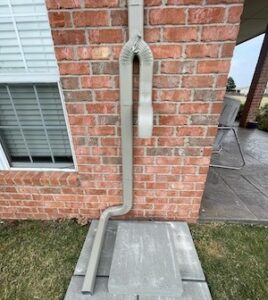
A gutter downspout is the vertical pipe that connects to your gutters and channels rainwater away from your home’s foundation. While gutters collect the water that rolls off your roof, downspouts are responsible for moving that water safely to ground level and directing it away from your house.
This matters more than most homeowners realize. Water that pools near your foundation can seep into basements and crawl spaces, cause soil erosion, damage landscaping, and over time lead to serious structural problems. A compromised downspout doesn’t just mean a little extra water in your yard. It can mean thousands of dollars in foundation repairs down the road. Keeping your downspout system in good shape is one of the most cost-effective ways to protect your home’s long-term value.
Types of Downspouts
Not all downspouts are created equal, and understanding the different types can help you make better decisions when it comes time to repair or replace yours.
Round vs. Rectangular Downspouts
The two most common downspout shapes you’ll encounter are round and rectangular downspouts. Round downspouts have been used for generations and remain popular today, particularly in traditional or older home styles. They tend to handle water flow efficiently and are widely available.
Rectangular downspouts, on the other hand, have become the standard in most modern residential construction. They offer a cleaner, more streamlined appearance and are generally considered more effective at moving large volumes of water quickly. If your home was built in the last few decades, there’s a good chance you already have rectangular downspouts in place.
The choice between the two often comes down to aesthetics and what’s already installed on your home. Mixing styles is generally not recommended, so if you’re replacing one downspout, it’s worth making sure the new one matches the existing system.
Materials: Aluminum, Vinyl, and Steel
Just like downspouts are manufactured in different shapes, they come in several different materials. Each material comes with its own set of strengths and trade-offs.
Aluminum Downspouts
Aluminum downspouts are by far the most popular option for residential homes. It’s lightweight, resistant to rust, easy to work with, and relatively affordable. Aluminum downspouts hold paint well and can be color-matched to your home’s exterior without much trouble. For most homeowners, aluminum is the practical choice.
Vinyl Downspouts
Vinyl is another common downspout option, particularly in warmer climates. It’s inexpensive and doesn’t rust or corrode. However, it can become brittle over time when exposed to extreme cold, which makes it less ideal in regions that experience harsh winters.
Steel Downspouts
Steel downspouts, particularly galvanized steel, are the heavy-duty option. They’re more durable than aluminum or vinyl and can withstand significant physical impact. It’s worth noting that steel downspouts are heavier, more expensive, and require more maintenance to prevent rust. Steel tends to be used in commercial applications or in situations where extra durability is a priority.
Signs Your Downspout Needs Attention
Many homeowners don’t think about their downspouts until something has already gone wrong. Knowing what to look for can help you catch problems early before they become expensive.
Clogs and Blockages
The most common downspout problem is a clog. Leaves, twigs, dirt, and debris can build up inside the pipe over time, especially at bends and joints where water slows down. When a downspout is clogged, water has nowhere to go and will overflow from the gutter above, spilling directly down the side of your home.
Signs of clogged gutters include water overflowing from your gutters during rain, water dripping or spraying from the joints of your downspout, and visible debris sticking out of the top or bottom of the pipe. If you notice any of these, the blockage needs to be cleared as soon as possible.
Improper Drainage and Water Pooling
Even when a downspout isn’t clogged, it can still fail to drain properly. If the downspout isn’t positioned correctly or doesn’t extend far enough from the house, water will discharge too close to the foundation. Over time, this leads to pooling, erosion, and potentially serious moisture intrusion in basements or crawl spaces.
Look for soggy patches of ground near your downspout exit points, water stains on your foundation, or a persistently damp basement after heavy rain. These are all red flags that your downspout isn’t directing water where it needs to go.
Visible Damage or Separation
Physical damage to a downspout can occur from storms, falling branches, lawn equipment, or simply the wear and tear of time. Dents, cracks, and holes are all problems that allow water to escape before it reaches the ground. Perhaps more common is separation, where the sections of the downspout pull apart from each other at the joints, leaving gaps that send water spraying in the wrong direction.
A separated downspout might not be obvious from the ground, but water stains on your siding or on your foundation near the downspout are a good indicator that something has come loose.
Downspout Extensions: Do You Need One?
A downspout extension is exactly what it sounds like: an additional length of pipe or a flexible tube that attaches to the end of your existing downspout to carry water further away from your foundation. If your downspout currently deposits water right next to your home, an extension can make a significant difference.
As a general rule, water should be directed at least four to six feet away from the foundation. In some cases, especially on properties with flat or poorly graded yards, even greater distance is needed. Extensions are a relatively inexpensive fix that can dramatically reduce the risk of foundation moisture problems.
When to Call a Professional
DIY gutter maintenance has its limits. While cleaning and minor fixes are manageable for most homeowners, there are situations where professional help is the smarter choice.
These are signs it’s time to call a professional:
- Downspouts are consistently clogging despite regular cleaning
- Signs of foundation moisture or basement leaks
- Sections of your system are damaged or improperly installed
- You’re simply not comfortable working on ladders around the roofline
Call Rain Guard Inc For Downspouts
Whether you’re dealing with a stubborn clog, damaged downspouts, improper drainage, or just want a professional set of eyes on your gutter system, Rain Guard Inc has the experience to handle it right. Protecting your home from water damage doesn’t have to be complicated, but it does require the right help when the situation calls for it. Reach out to Rain Guard Inc today and make sure your downspouts are doing the job they were built to do.
Aside from gutter downspout cleaning and maintenance, we specialize in numerous gutter services including seamless gutters, commercial gutters, leaf filters, gutter guards, and more. In order to keep your guttering system feeling like brand new gutters, consider opting for our gutter maintenance services. We look forward to helping you achieve the services you need to maintain and/or repair your gutters.
Contact Rain Guard Inc
We have 3 offices across the Oklahoma City metro area to best serve you.
OKC Office
Edmond Office
Norman Office