

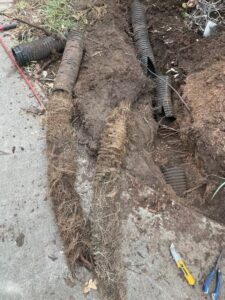
- French drain repair involves complex excavation, precise slope grading, pipe replacement, and material selection.
- Common French drain failures stem from clogged gravel beds, collapsed pipes, root intrusion, and improper installation.
- Rain Guard Inc provides experienced french drain installation and repair services with proper equipment, warranties, and expertise.
French drains are essential components of effective drainage systems, designed to redirect water away from your home’s foundation. When functioning properly, french drain installation can protect your property from flooding, soil erosion, and structural issues for years. However, like any drainage system, french drains can deteriorate over time, leading to reduced effectiveness and potential property damage. Understanding what’s involved in repairing a French drain can help you make an informed decision about whether to attempt a DIY fix or call in professional drainage experts.
Signs Your French Drain Needs Repaired
Recognizing the warning signs of a failing French drain early can prevent minor issues from escalating into major problems. Understanding these symptoms will help you determine when intervention is necessary.
Standing Water Near the Foundation
One of the most obvious indicators that your French drain isn’t functioning properly is the presence of standing water pooling near your home’s foundation. This water should be channeled away by the drain system.
Slow or No Water Flow Through the Drain
If you notice that water takes an unusually long time to drain after rainfall, or if there’s no visible water movement through the system at all, your French drain is likely clogged or compromised.
Water Seeping Into the Basement or Crawl Space
Perhaps the most alarming sign is water infiltration into your basement or crawl space. If you’re noticing dampness, water stains, mold growth, or actual standing water in these areas after heavy rain, your French drain has likely failed completely.
Soil Erosion or Soggy Spots in the Yard
When French drains malfunction, it results in visible soil erosion, where topsoil washes away, creating channels and bare spots. You might also notice perpetually soggy areas in your yard where grass won’t grow or where the ground feels spongy underfoot.
Unpleasant Odors
A functioning French drain moves water continuously, but when the system becomes clogged or blocked, water can become stagnant within the pipes and gravel bed. This stagnant water produces musty, unpleasant odors that signal water isn’t flowing through the system properly.
Common Causes of French Drain Failure
Over time, fine sediment, silt, and organic matter can infiltrate the gravel surrounding your drain pipe, filling the voids that should remain open for water flow. This gradual clogging process reduces the drain’s capacity and eventually blocks water movement entirely. Tree and shrub roots naturally grow toward moisture sources, and your French drain is essentially a water highway running through your yard. Aggressive root systems can penetrate drain pipes through perforations, grow inside the pipe, and create complete blockages. Many french drain failure issues can be prevented if proper maintenance is implemented.
Tools Needed For French Drain Repair:
- Excavation Tools (Shovel, Mattock, or Trencher)
- Replacement Drain Pipe and Fittings
- Gravel or Drainage Stone
- Filter Fabric or Geotextile Material
- Jetting or Flushing Equipment (Optional)
- Basic Hand Tools (Level, Tape Measure, Utility Knife)
Step 1: Locate and Inspect the Drain
Before you can repair your French drain, you need to know exactly where it is, how it’s configured, and where the problems exist. You’ll need to carefully excavate test holes to expose the drain line without damaging it, which requires knowing approximately where it runs. Once exposed, you must inspect the entire system to identify all problem areas, not just the obvious ones. A drain might be clogged in multiple locations, or have both blockage and structural damage. Incomplete diagnosis means incomplete repairs, which means wasted effort when the system fails again shortly after your repair attempt.
Step 2: Clear Blockages and Debris
If your inspection reveals blockages, clearing them is the next logical step. Surface blockages near inlets might be accessible, but clogs deep within the pipe system require specialized tools. You might attempt flushing with a garden hose, but residential water pressure often lacks the force needed to clear significant obstructions. More stubborn clogs require drain snakes or professional jetting equipment.
Step 3: Repair or Replace Damaged Pipes
Cracked, collapsed, or separated pipes must be repaired or replaced to restore drain function. This requires excavating down to the damaged section, carefully removing the failed pipe without disturbing surrounding gravel and soil more than necessary, and installing new pipe sections with proper fittings and connections. Improper repairs can actually make drainage worse by creating new low spots where water pools, or by inadvertently reversing the slope so water flows backward.
Step 4: Improve the Filter Fabric Layer
The bed surrounding your drain pipe is essential for proper function. Filter fabric should completely surround the gravel bed, wrapped with generous overlap to prevent soil infiltration at seams. Getting this layer right requires a depth of 8-12 inches below the pipe and 2-3 inches above. The fabric positioning and backfilling techniques shouldn’t compromise the fabric or displace the gravel. Mistakes at this stage doom your repair to early failure, as soil will infiltrate the gravel bed and clog the system again within months or a few years.
Step 5: Regrade the Soil for Proper Drainage
After repairing or replacing drain components, proper surface grading ensures water enters the system efficiently and that surrounding soil slopes away from problem areas. Poor surface grading can overwhelm even a perfectly functioning French drain, or can prevent water from entering the system at all.
Step 6: Test the Drain to Ensure Proper Function
Once repairs are complete, thorough testing is essential before backfilling and restoring your yard. This means running substantial water through the system and observing flow at all points. You’re looking for proper flow rates, no backup or ponding, and confirmation that water exits where intended.
Preventative Maintenance Tips
Even after successful repair, French drains require ongoing maintenance to continue functioning properly. Understanding these maintenance requirements helps you appreciate the long-term commitment involved in drainage system ownership. Check drain inlets, outlets, and visible components at least quarterly, and especially after major storms. Look for signs of backup, slow drainage, or debris accumulation. Running high-volume water through your French drain once or twice yearly helps clear minor accumulations before they become problematic clogs. Maintain at least a 10-foot buffer between drain lines and trees or large shrubs. Lastly, monitor your property’s surface drainage and address any settling or grade changes promptly. The less debris that enters your French drain system, the longer it will function effectively.
Call Rain Guard Inc For French Drain Repair
The specialized knowledge required to properly diagnose drainage issues, expensive tools and materials needed, and the high risk of incorrect repairs make professional drainage services the smarter choice. Contact Rain Guard Inc today for a professional assessment of your French drain system. We’ll provide an honest evaluation, clear explanation of necessary repairs, and a competitive quote for professional service that protects your home. Let us handle the dirty, difficult work while you enjoy the results: a properly functioning drainage system that keeps your property dry and protected for years to come.
If you have questions about French drains, our experts have the answers! We also specialize in other types of underground drainage systems, as well as seamless gutters, commercial gutters, leaf filters, gutter guards, and more. In order to keep your guttering system feeling like brand new gutters, consider opting for our gutter maintenance services. We look forward to helping you achieve the services you need to maintain and/or repair your french drain..
Contact Rain Guard Inc
We have 3 offices across the Oklahoma City metro area to best serve you.
OKC Office
Edmond Office
Norman Office